

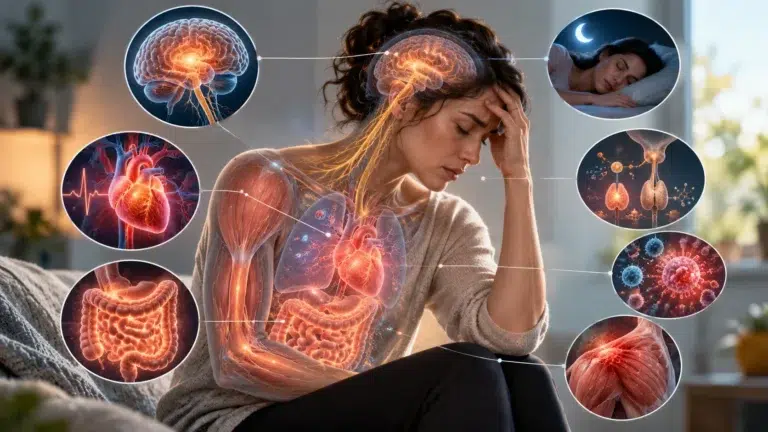
Understanding how chronic stress changes the body can change the way you think about stress itself. A racing mind is only one part of the story. When the brain repeatedly interprets life as demanding, threatening, uncontrollable, or never finished, the body responds physically: heart rate rises, muscles tighten, glucose is mobilized, digestion shifts, attention narrows, and stress hormones help prepare you to act.
That response is useful when a threat is short-lived. The problem is not that your body has a stress system. The problem is when the alarm keeps firing without enough recovery. Over time, repeated activation can create what researchers call allostatic load — the cumulative wear associated with adapting again and again to ongoing demands.
That does not mean chronic stress single-handedly causes heart disease, diabetes, digestive disorders, depression, or every other condition associated with it. Complex diseases have multiple causes. But the evidence is strong enough to make one point clear: stress management is not merely about feeling calmer. It is part of physical health stewardship.
| “Stress is not only what you feel. It is also what your body has to keep doing when the alarm does not fully turn off.” |
Table of Contents
Acute Stress Is a Feature. How Chronic Stress Changes the Body and Becomes a Problem.
A normal stress response is adaptive. The sympathetic nervous system and adrenal hormones prepare you for action. Heart rate and breathing increase. Energy becomes more available. Attention shifts toward the immediate problem. Once the challenge passes, the parasympathetic nervous system helps the body return toward baseline.
Chronic stress is different. The stressor persists, repeats too often, or becomes psychologically difficult to escape. The body may spend too much time preparing for action and too little time recovering. The American Psychological Association notes that prolonged stress can affect cardiovascular, gastrointestinal, nervous, musculoskeletal, endocrine, and immune function.
The broader systems picture also fits the argument developed in Why Has Our Health Declined in the Last 60 Years?: modern health pressures often stack together. Poor sleep increases stress sensitivity; stress can worsen sleep. Time pressure can reduce movement and increase reliance on convenient food. Financial or relational strain can erode recovery. The result is usually a system problem, not one villain.
1. Your Brain and Nervous System Can Get Stuck in High Alert
Stress begins as a brain-body interpretation problem: something is judged to require action. The autonomic nervous system then changes heart rate, breathing, blood flow, muscle readiness, and digestion. The HPA axis adds another layer by releasing glucocorticoids such as cortisol.
In the short term, those changes are useful. With persistent stress, however, concentration may suffer, irritability can rise, and the mind can become more biased toward threat detection. APA guidance lists fatigue, impaired concentration, memory problems, anxiety, and depression among the problems associated with chronic stress.
This is why “just relax” is often poor advice. The problem is not simply a bad thought. The nervous system has learned to remain ready. Recovery has to be practiced physically as well as mentally.
2. Your Heart and Blood Vessels Carry the Load
Acute stress raises heart rate and blood pressure because the body is preparing to move. Chronic stress repeatedly exposes the cardiovascular system to stress hormones and sympathetic activation. APA notes that persistent stress can contribute to long-term cardiovascular problems, including hypertension, heart attack, and stroke risk.
The wording matters: stress is one contributor among many, not a stand-alone explanation for cardiovascular disease. Genetics, smoking, exercise, sleep, diet, blood pressure, diabetes, lipids, medication adherence, and social conditions all matter. But chronic stress can worsen several of those pathways at once.
3. Your Muscles Can Stay Braced Long After the Threat Is Gone
Muscle tension is one of the most immediate physical signs of stress. Shoulders rise. The jaw tightens. The neck stiffens. Headaches can become more frequent. The body is preparing to protect itself.
When tension becomes habitual, discomfort itself can become another stressor. Pain reduces sleep quality; poor sleep lowers resilience; lower resilience increases perceived strain. That feedback loop is one reason recovery practices should include movement, posture changes, and deliberate muscle relaxation rather than relying on positive thinking alone.
4. Stress Can Change Digestion Through the Gut-Brain Axis
The digestive system is tightly connected with the nervous system. APA notes that stress can change gut-brain communication, increase sensitivity to pain and bloating, alter intestinal movement, and worsen symptoms in conditions such as irritable bowel syndrome.
That does not mean stress causes every stomach problem, ulcer, or bowel disorder. In fact, APA specifically notes that stress does not cause stomach ulcers; most are linked to Helicobacter pylori infection or certain medications. Stress can, however, change symptoms and behavior around eating.
This is another reason diet and stress should not be treated as isolated topics. Our article What Changed in the American Diet Since 1960? shows how the food environment changed. Stress adds another layer because time pressure, fatigue, and reward-seeking can influence what and how much people eat.
5. Stress and Sleep Can Reinforce Each Other
Stress can make sleep harder, and poor sleep can make stress harder to regulate. Reviews of sleep, stress, and metabolism describe a two-way relationship involving the HPA axis and neuroendocrine regulation.
That matters because insufficient or disrupted sleep does not stay confined to the bedroom. It affects appetite regulation, glucose handling, mood, reaction time, and decision quality. When stress steals sleep, the next day often begins with less physiological margin.
One practical implication follows: if you are trying to reduce chronic stress while consistently sleeping too little, sleep is not a side project. It is part of the stress intervention.
6. Immune and Inflammatory Signaling Can Become Dysregulated
The immune system and stress system communicate constantly. Cortisol normally helps regulate immune activity and inflammation. With chronic stress, that communication can become less well regulated. APA describes chronic stress as capable of impairing normal immune-system communication and recovery.
This does not justify vague claims that stress “destroys immunity” or that emotional calm cures inflammatory disease. The evidence is more nuanced: repeated stress can alter immune signaling and may increase vulnerability or symptom burden, but the effect depends on the person, the stressor, the disease, and many other variables.
7. Appetite, Glucose Regulation, and Metabolism Can Shift
Stress hormones mobilize energy. Cortisol and catecholamines help make glucose available when the body believes action is needed. That is useful in an emergency. With chronic stress, however, persistent neuroendocrine activation can interact with sleep loss, appetite, visceral fat, inflammation, and insulin sensitivity.
Reviews in the medical literature describe plausible pathways connecting chronic stress with insulin resistance and type 2 diabetes risk. Those pathways do not mean that stress alone causes diabetes. They mean that chronic stress can become one more metabolic pressure inside an already complex system.
The practical lesson is not to fear cortisol. Cortisol is essential. The goal is to reduce unnecessary chronic activation and restore a healthier rhythm of challenge and recovery.
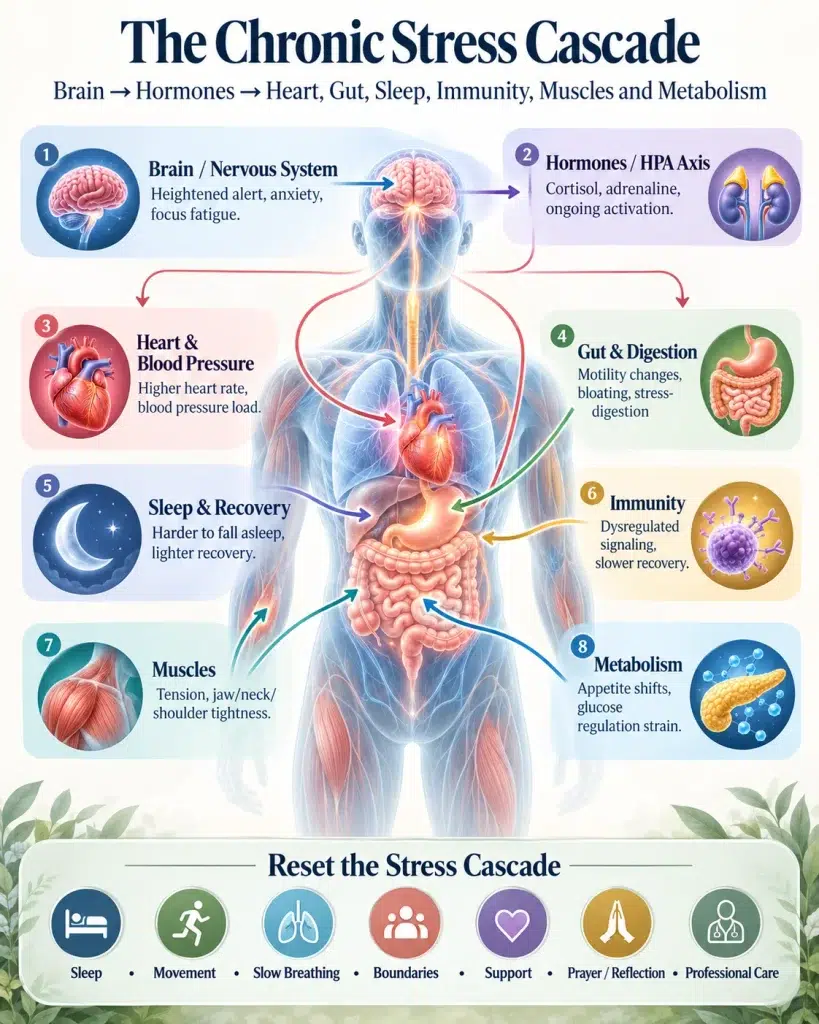
The Chronic Stress Cascade: One Pressure, Many Systems
| System | Short-Term Stress Response | When Activation Becomes Chronic |
| Brain / nervous system | Sharper threat focus; faster response | Fatigue, concentration problems, anxiety, irritability, reduced recovery |
| Cardiovascular | Faster heart rate; higher blood pressure | Repeated vascular load; hypertension and cardiovascular risk contribution |
| Muscles | Tension and readiness | Neck/jaw/shoulder tension, headaches, pain loops |
| Digestive | Motility and appetite shift | Bloating, discomfort, bowel changes, symptom amplification |
| Sleep | Temporary vigilance | Difficulty falling/staying asleep; less restorative recovery |
| Immune signaling | Acute coordination of defense | Dysregulated inflammatory/immune communication |
| Metabolism | Mobilize glucose and energy | Appetite changes, insulin-resistance pressure, weight/metabolic interaction |
What Actually Helps Interrupt the Cycle?
The most effective stress plan is usually not one dramatic technique. It is a recovery system. The goal is to reduce avoidable stressors where possible, increase the body’s ability to return toward baseline, and get help when the demands exceed what self-care can solve.
| Reset Lever | What It Does | Practical Starting Point |
| Sleep | Restores recovery capacity and supports neuroendocrine rhythm | Protect a consistent sleep window; reduce late-night stimulation; address persistent insomnia. |
| Movement | Uses stress-mobilized energy and supports cardiovascular/metabolic health | Walk daily; add resistance or aerobic training appropriate to your health status. |
| Slow breathing / relaxation | Activates the relaxation response and can reduce acute physiological arousal | Use several minutes of slow breathing, progressive muscle relaxation, or guided relaxation. |
| Boundaries | Reduces preventable repeated activation | Identify one recurring demand that can be delegated, declined, delayed, or simplified. |
| Social support | Buffers stress perception and reduces isolation | Talk with someone trustworthy before the problem becomes private rumination. |
| Prayer / reflection | Creates perspective, honesty, and a structured pause | Name the burden, ask for wisdom, release what you cannot control, and choose the next faithful action. |
| Professional care | Addresses persistent symptoms or conditions that self-help cannot resolve | See a clinician or mental-health professional when stress is prolonged, disabling, or accompanied by concerning symptoms. |
For the spiritual side of overload, How to Pray When You Do Not Know What to Say offers a simple starting point: tell the truth, ask for the next faithful step, and stop treating prayer as a performance. That does not replace medical care. It can, however, become part of a healthier recovery rhythm.
The Cheapest High-Value Intervention May Be Recovery Time
One of the most expensive misconceptions about health is that every problem requires a product. Chronic stress often responds to things that cannot be bottled: sleep, walking, sunlight, quiet, friendship, boundaries, prayer, time away from screens, and a realistic workload.
Those interventions are not glamorous, and they are not always enough. A person facing poverty, caregiving strain, trauma, unsafe work, chronic pain, or a serious medical condition may not be able to breathe their way out of the underlying stressor. Good stress advice has to respect reality.
The goal is not to blame people for being stressed. It is to recognize where control exists, protect recovery where possible, and obtain additional support where it does not.
When Stress Symptoms Deserve Medical Attention
Do not automatically label every physical symptom as “stress.” Chest pain, fainting, new neurological symptoms, severe shortness of breath, persistent unexplained weight change, significant gastrointestinal bleeding, severe depression, suicidal thoughts, or other urgent symptoms need appropriate medical evaluation.
Likewise, if stress, anxiety, insomnia, panic, or low mood is interfering with daily function for an extended period, professional support is appropriate. The CDC and NCCIH both emphasize getting additional help when stress becomes difficult to manage or symptoms persist.
Conclusion: Your Body Needs a Recovery Signal, Not Just a Better Attitude
Chronic stress is not imaginary, and it is not “all in your head.” It is a whole-body state produced by systems designed to protect you. The same systems that help you survive an emergency can become costly when they stay activated too often.
That is why the solution is not to eliminate all stress. Some stress is useful, meaningful, and unavoidable. The better goal is rhythm: challenge followed by recovery, effort followed by rest, responsibility balanced by limits, and vigilance interrupted by signals of safety.
If you can reduce even one source of repeated activation and strengthen one reliable recovery habit, you have already changed the system. The body does not need perfection. It needs more chances to come back down.
| “The goal is not a stress-free life. It is a body that remembers how to recover.” |
Source and Fact-Checking Notes
- American Psychological Association — Stress Effects on the Body — Detailed system-by-system overview of acute and chronic stress effects on cardiovascular, gastrointestinal, nervous, endocrine, immune, musculoskeletal, respiratory, and reproductive function. Source
- American Psychological Association — How Stress Affects Your Health — Public-health overview distinguishing adaptive acute stress from chronic stress and summarizing long-term mental and physical health associations. Source
- CDC — Managing Stress — Current public guidance that long-term stress can worsen health problems and that ongoing stress should be addressed rather than normalized. Source
- NCCIH — Stress — NIH/NCCIH overview of the fight-or-flight response, chronic-stress health effects, and the relaxation response. Source
- NCCIH — Relaxation Techniques: What You Need To Know — Evidence-calibrated discussion of breathing, relaxation, biofeedback, and safety; used to avoid overstating these techniques as disease treatments. Source
- PubMed — Stress, Adaptation, and Disease: Allostasis and Allostatic Load — Foundational description of allostatic load as the physiological price of repeated or poorly terminated adaptive responses. Source
- PubMed — Allostatic Load Biomarkers of Chronic Stress and Impact on Health and Cognition — Review of multisystem neuroendocrine, immune, metabolic, and cardiovascular dysregulation associated with chronic stress exposure. Source
- PubMed — Interactions Between Sleep, Stress, and Metabolism — Review supporting the reciprocal relationship among HPA-axis activity, sleep disruption, and metabolic regulation. Source
Sources and Further Reading
The following sources support key claims, provide background context, and help readers examine the topic more deeply. This article is educational and should not replace guidance from a qualified healthcare professional.
- APA — Stress Effects on the Body — Read
- APA — How Stress Affects Your Health — Read
- CDC — Managing Stress — Read
- NCCIH — Stress — Read
- NCCIH — Relaxation Techniques — Read
- PubMed — Allostasis and Allostatic Load — Read
- PubMed — Stress, Sleep, and Metabolism — Read
Closing CTA
Choose one repeated stress trigger you can realistically reduce and one recovery habit you can practice every day for the next two weeks. Protect sleep, move your body, create a breathing or prayer pause, restore a boundary, or ask for help. The goal is not to become perfectly calm. It is to give your body more consistent evidence that the emergency is over.
Disclosure
This article is educational and is not individualized medical or mental-health advice. Stress-related symptoms can overlap with medical conditions that require evaluation. Do not assume that persistent or severe symptoms are caused by stress alone. Seek appropriate medical or mental-health care for concerning, prolonged, or function-limiting symptoms.
